Amethyst: Meaning, Properties & How to Use It
6 min read
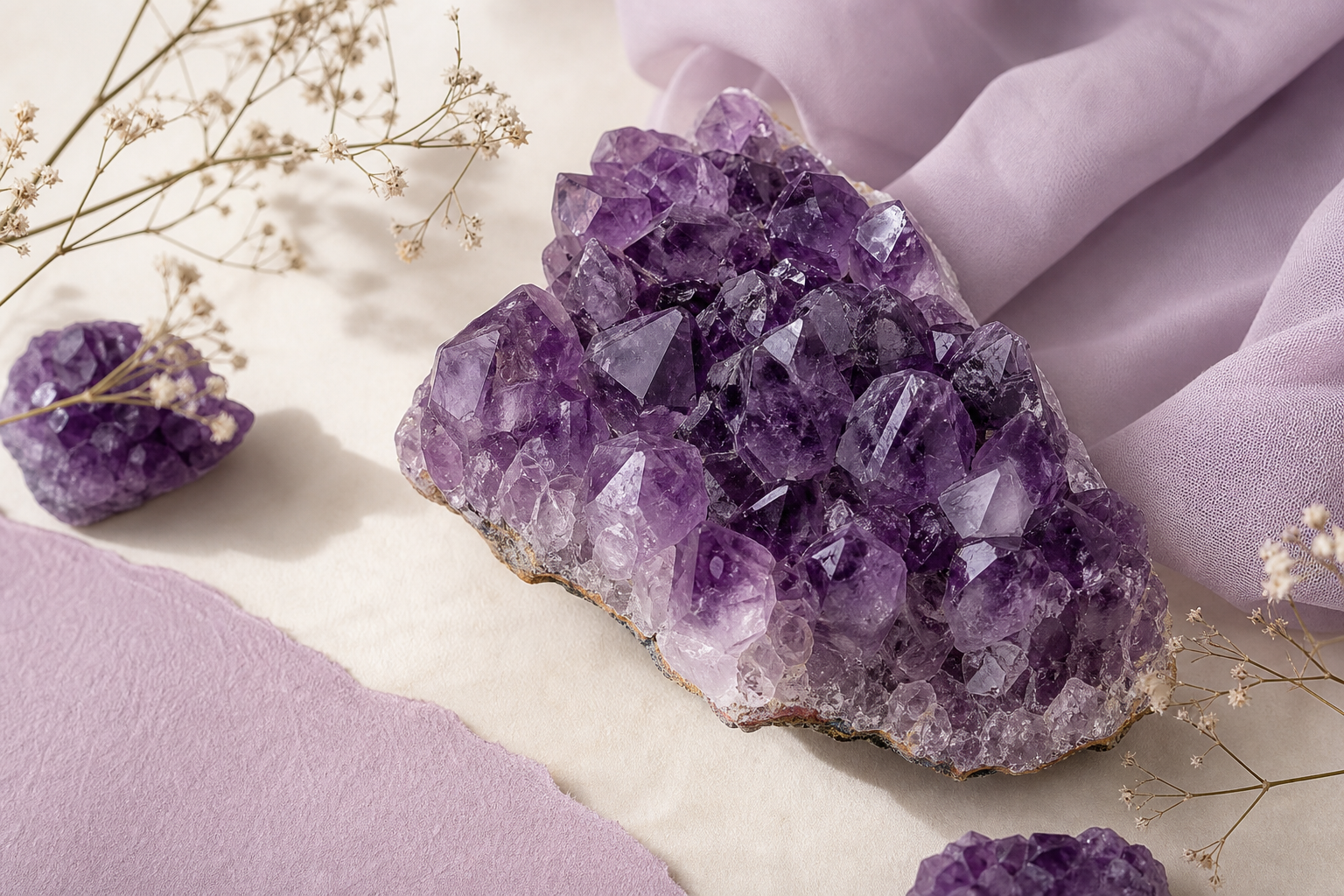
Amethyst is the soft violet quartz that has captivated people for thousands of years — from ancient Greece to royal crowns to the modern bedside table. It is, for many, the first crystal they ever fall in love with.
In this guide we'll walk through what amethyst traditionally represents, where those beliefs come from, and the simple, calming ways people bring it into daily life. A gentle note before we begin: everything below describes traditional belief and folklore, not science or medicine.
What Amethyst Represents
Amethyst is best known as the stone of the calm and clear mind. In crystal tradition it is associated with intuition, restful sleep, and a settled, less anxious state of being.
Its purple colour has long linked it to the crown chakra — the energy centre traditionally tied to awareness and spiritual connection. That's why you'll often see amethyst in meditation spaces and on nightstands.
A Little History & Folklore
The name comes from the Ancient Greek 'amethystos', meaning 'not intoxicated'. Greeks and Romans believed the stone could guard against drunkenness, and wine goblets were sometimes carved from it.
Through the centuries amethyst appeared in religious jewelry, royal regalia, and protective amulets. These are cultural stories and beliefs — beautiful history rather than proven fact, but a big part of why the stone feels so meaningful to collectors today.
How People Use Amethyst at Home
Most people keep amethyst somewhere they want a sense of calm: a bedside table to wind down, a desk to ease a busy mind, or a meditation corner.
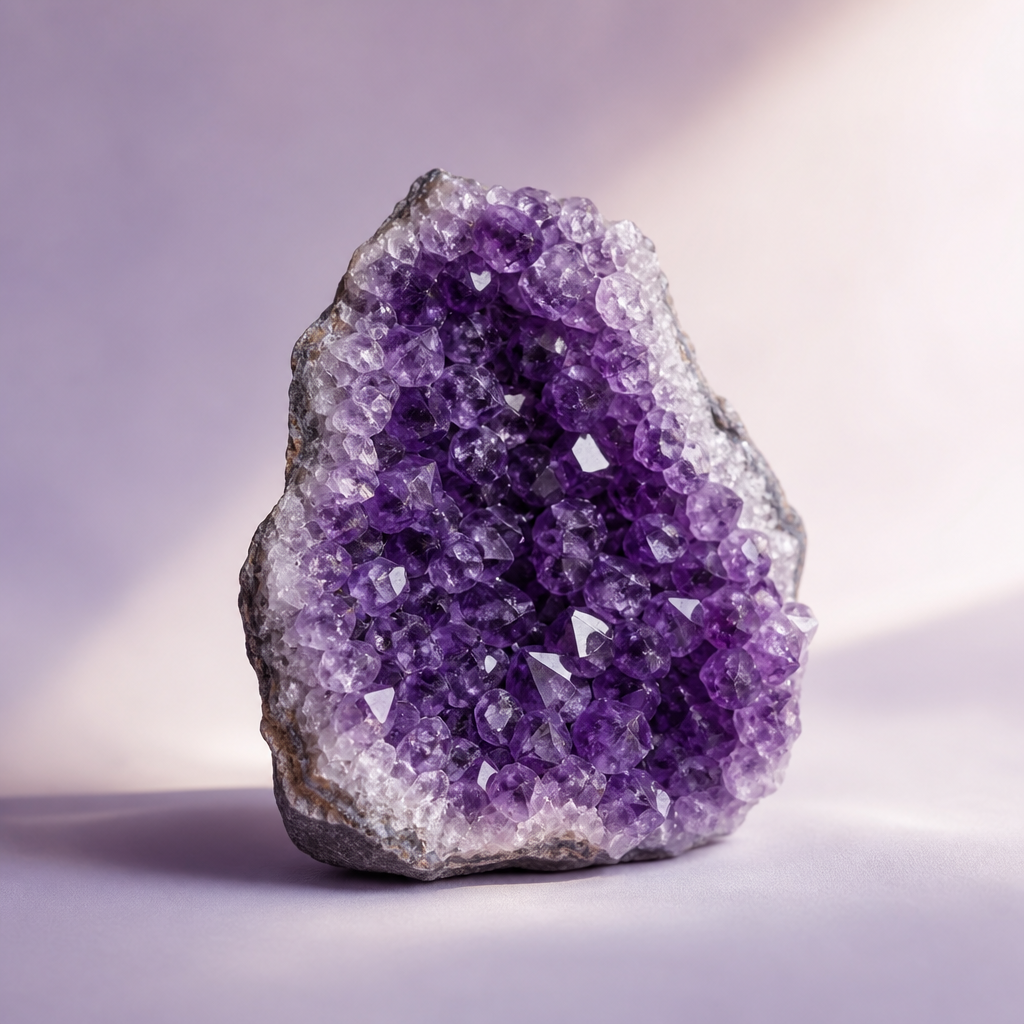
A raw cluster or geode makes a striking centrepiece, while small tumbled stones are easy to hold during slow breathing or to carry in a pocket. There's no wrong way — much of the value is simply the daily reminder to pause.
Caring for Your Amethyst
Amethyst is durable but its colour can fade in strong, prolonged sunlight, so keep display pieces out of direct sun. Many people 'cleanse' their stones under moonlight or with sound once a month — again, a personal ritual rather than a scientific necessity. A soft cloth and the occasional gentle rinse keep it looking its best.
Frequently asked questions
A gentle note
The metaphysical, healing, and energy properties described on StoneLune reflect long-standing traditional beliefs, cultural folklore, and spiritual practice. They are not scientific or medical facts. Crystals are not a treatment for any condition and are not a substitute for professional medical, psychological, or financial advice. We share them for their beauty and meaning — please enjoy them in that spirit.