Citrine: Unlocking Its Meaning, Uses & Abundance in Traditional Belief
5 min read
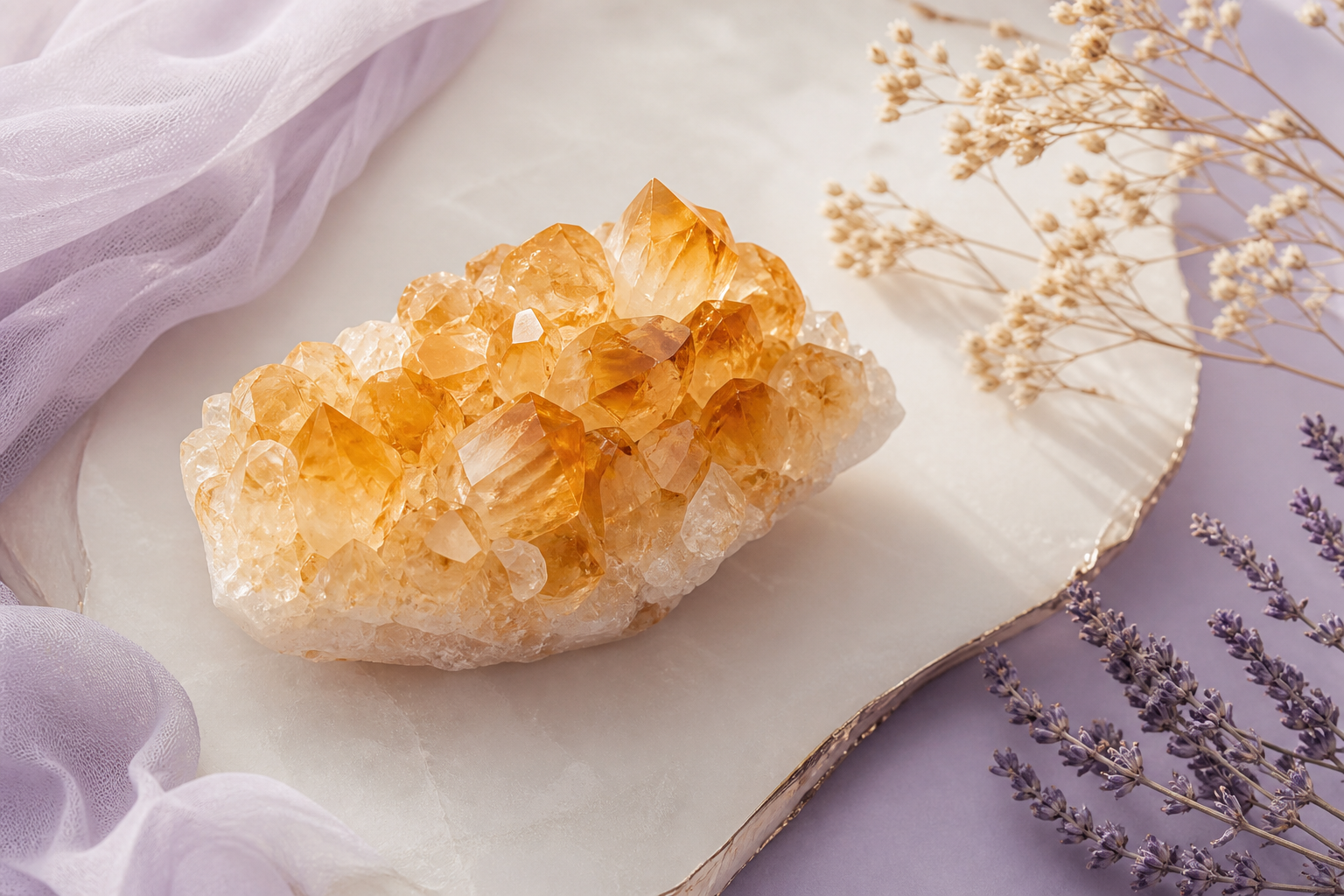
Welcome, dear crystal enthusiasts, to the vibrant world of Citrine – a gemstone celebrated for its warm, inviting glow. Often referred to as the 'light maker' or 'sunstone,' its bright hue has captivated hearts and minds for centuries. In this guide, we'll delve into the rich tapestry of traditional beliefs, folklore, and spiritual practices surrounding this beautiful crystal.
It's important to remember that all discussions about crystal properties, energy, and healing are rooted in spiritual traditions, historical folklore, and personal belief systems. These practices are not scientific or medical, and crystals should never be used as a substitute for professional medical advice or treatment.
What Citrine Represents
According to ancient lore and spiritual traditions, Citrine is deeply associated with warmth, joy, and the power of the sun. Many believe its radiant energy traditionally embodies positivity, helping to uplift spirits and inspire a brighter outlook. It is often linked to the concept of clearing away negativity, making space for optimism and light.
Within the realm of crystal traditions, Citrine is perhaps most famously known as a stone of abundance and prosperity. It is said to carry energies associated with attracting wealth, success, and good fortune. This belief stems from its historical connection to merchants and its reputation for assisting in manifestation and the generous flow of positive outcomes.
History & Folklore
The allure of Citrine stretches back through history, with its golden hues captivating ancient civilizations. The ancient Romans, for instance, were known to craft beautiful jewelry and intaglios from Citrine, valuing its beauty and perceived protective qualities. It was often carried as a talisman, a practice rooted in the belief that it could offer protection against evil and snake venom.
Throughout the Middle Ages, Citrine continued to be revered. Folklore from this period suggests it was used by healers in a spiritual context, believed to aid with various ailments, though these were always within the framework of traditional folk medicine and not scientific medical practice. Its name, derived from the French word 'citron' meaning lemon, reflects its citrusy color, further connecting it to brightness and vitality in traditional thought.
How People Use It
Those who work with crystals in their spiritual practices often place Citrine in specific areas to align with its traditional energetic associations. In Feng Shui, for example, Citrine is commonly placed in the 'wealth corner' (Southeastern part) of a home or office, as it is traditionally believed to attract prosperity and abundance. Small pieces are also sometimes kept in wallets or cash registers with the intention of encouraging financial flow.
Beyond spatial placement, Citrine is often incorporated into personal rituals. Many individuals wear Citrine as jewelry or keep a small stone in their pocket, believing it helps to foster a positive mindset, creativity, and self-confidence throughout the day. For those engaging in meditation or manifestation practices, Citrine is sometimes held or placed nearby to help focus intentions related to success, joy, and the realization of aspirations, all within a personal belief system rather than as a guaranteed outcome.
Caring for Your Citrine
To maintain the beauty and traditional energetic vibrancy of your Citrine, gentle care is recommended. Cleanse your crystal periodically with lukewarm water and a mild, natural soap, then pat it dry with a soft cloth. While Citrine is a relatively hard crystal, prolonged exposure to direct sunlight can cause its beautiful golden color to fade over time. It's best to store it in a place where it won't be exposed to harsh light, keeping its radiant hue vibrant for years to come.
Frequently asked questions
A gentle note
The metaphysical, healing, and energy properties described on StoneLune reflect long-standing traditional beliefs, cultural folklore, and spiritual practice. They are not scientific or medical facts. Crystals are not a treatment for any condition and are not a substitute for professional medical, psychological, or financial advice. We share them for their beauty and meaning — please enjoy them in that spirit.